Paul Davis
A preacher's son whose slow ballad refused to leave the chart
Paul Davis spent 40 weeks on the Hot 100 with “I Go Crazy”, then walked away from the music business for good.
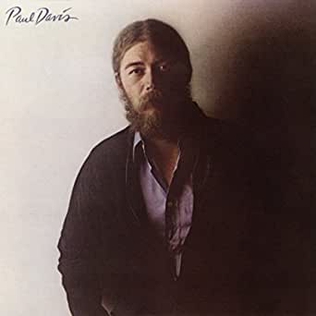
Paul Lavon Davis was born in Meridian, Mississippi, the son of a preacher. By around 1966 he was in a local band, the Six Soul Survivors, and later the Endless Chain. In 1968 he was writing for Malaco Records in Jackson, and a year later Ilene Berns, widow of Bert Berns, signed him to Bang Records.
The first records did modest business: a cover of the Jarmels' “A Little Bit of Soap” reached No. 52 in 1970, and the title track of his third album, Ride 'Em Cowboy, was his first top 40 single in January 1975. Then came the ballad that defined him. “I Go Crazy” peaked at No. 7 in March 1978 after 30 weeks on the Hot 100, and it stayed for 40 weeks, which at the time was a record for the longest run on the chart.
After Bang folded he signed to Arista in 1981 and scored two more hits. “Cool Night” reached No. 11 on the Hot 100 and No. 2 on the Adult Contemporary chart in February 1982, and “'65 Love Affair”, a Top 10 hit on both, became his highest-charting single at No. 6. “Cool Night” has since been listed as an example of yacht rock, and stations devoted to the style keep his songs in regular rotation.
Davis grew increasingly disillusioned with the industry and retired from making records in 1983, apart from two duets that went to No. 1 on the country chart, with Marie Osmond and with Tanya Tucker and Paul Overstreet. He also wrote “Meet Me in Montana” and “Bop” for his friend Dan Seals. He left the business for good in 1988, an avid golfer and billiards player, and survived a shooting in Nashville in 1986. What remains is a soft-focus sound that outlasted the man's wish for a quieter life.
On Coast Ibiza
Songs by Paul Davis in the Coast Ibiza playlist:
 '65 Love Affair1976
- Cool Night
 I Go Crazy1995
This story is based on the Wikipedia article “Paul Davis (singer)” and is shared under the Creative Commons Attribution-ShareAlike 4.0 licence. Read the Wikipedia article.